Never tilt your head back to look directly at the old cardboard box you’re pulling down from that long-forgotten basement shelf. You know what I’m talking about: the tears, the dusty boogers, the chalky coarseness covering your throat and smothering your alveoli.
I learned that lesson for the thousandth time just the other week.
That was an unnecessarily dramatic way to say I got some dust in my face while helping my parents shuffle boxes around their house. Why am I talking about this? I don’t know–I just thought it was an interesting way to begin this post. However, I’m not here to whine about the dirty basement facial I received; I’m here to talk about what I found in that yucky cardboard box.
2025 was a year. One of many, in fact. And September was a month within that year. One of several, in fact. I was sixteen years old. I was very cool and popular, and the ladies loved me, yet I only had eyes for one slim, rectangularly cuboid young lass: PlayStation 2.
Although I would occasionally sneak around and smooch with XBOX, PS2 was my main gal. I was smitten. When I wasn’t with her, I was studying the ins and outs of her bod—
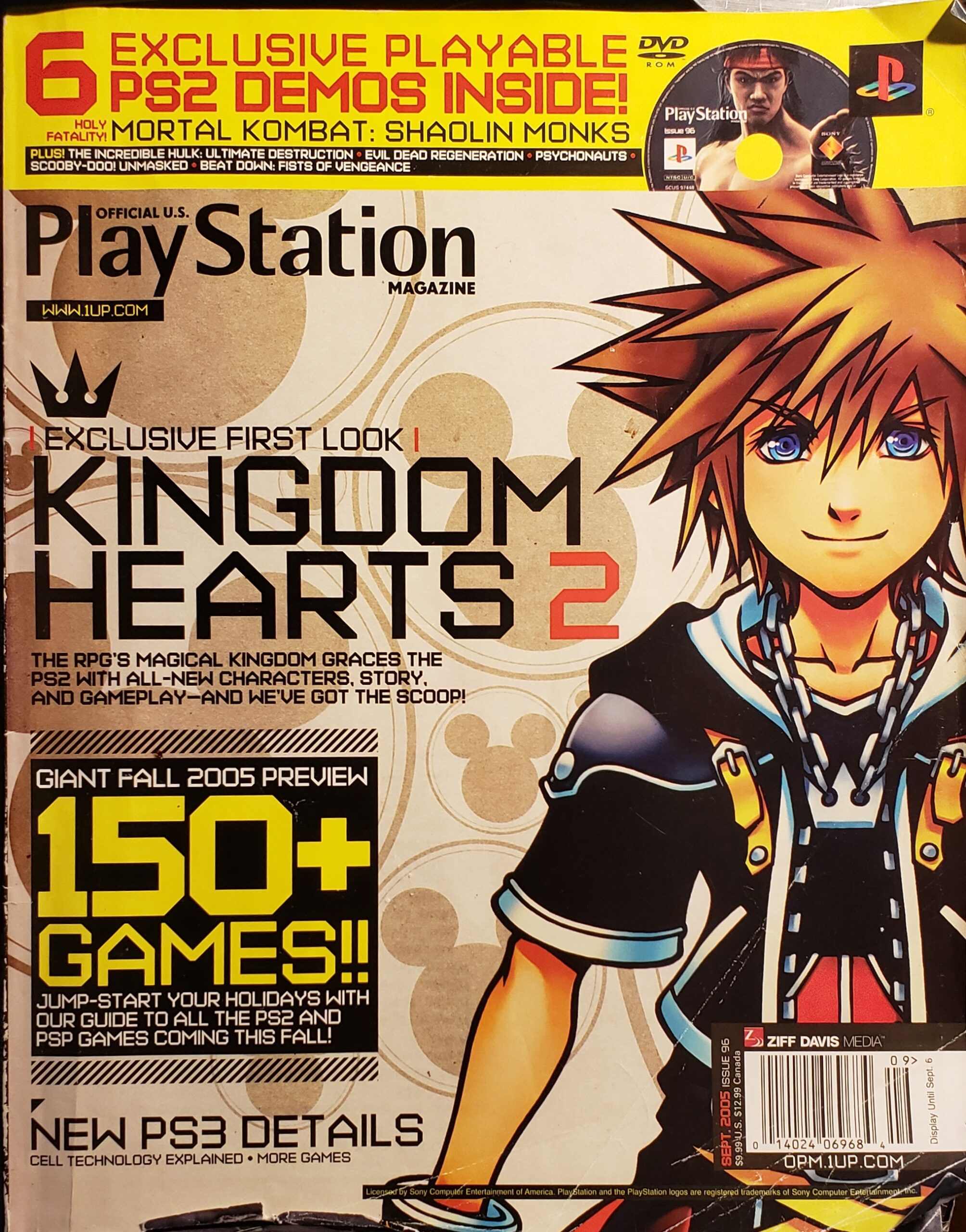
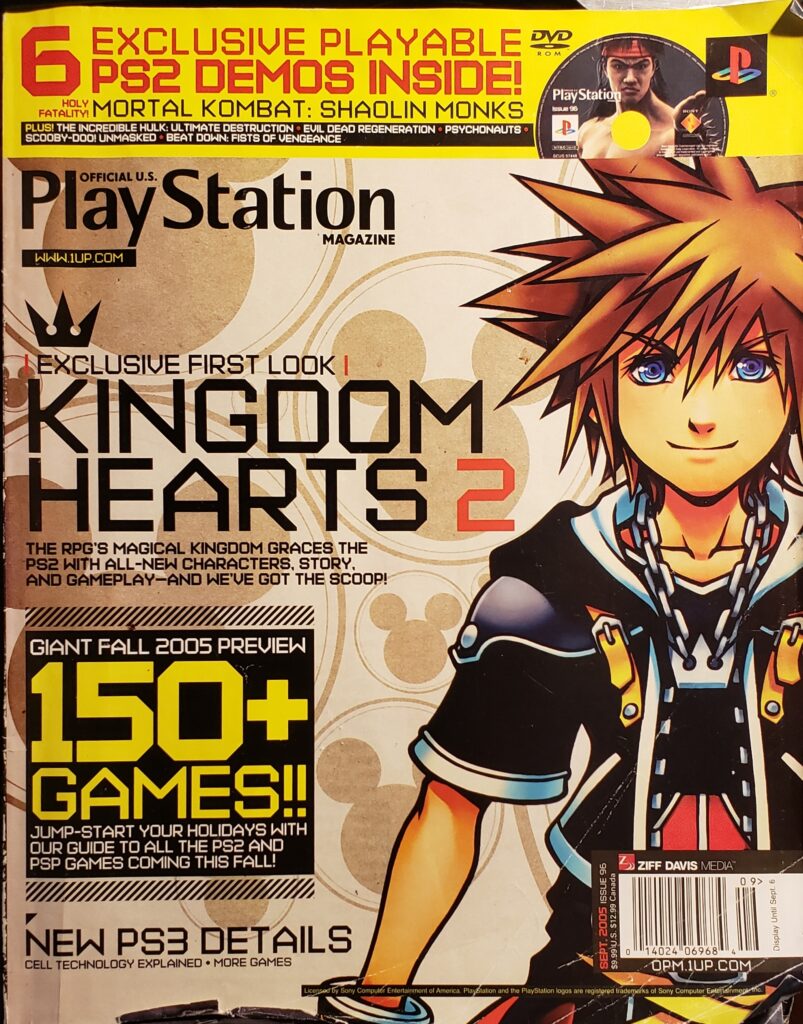
Alright, this is getting a bit gross and weird (equating women and objects always was), and I think it might be time for my egg-battered brain to transmit at least one relevant sentence to my Funyuns-crusted fingers: the thing I found in the box was an issue of Official U.S. PlayStation Magazine circa September 2005.
Throughout my life, my love for anything book-like has permeated my love for video games, and I would devour magazines, strategy guides, novelizations–I would transfer their glorious information through my optical balls and into the chickpea that lives within my skull.
I don’t remember anything at all about this particular issue of Official U.S. PlayStation Magazine circa September 2005, or any particular issue of Official U.S. PlayStation Magazine circa Anytime, but that doesn’t matter because time is meaningless and will only steal your joy. Maybe a meditative journey down Magazine Memory Lane will help invigorate us, shield us from the mercilessly cold trudge of our lives. And yet, as the leaves change and the particles disperse and the years spiral through the long dark of eternity, to the end of our days we shall defiantly say: our video games will always remain.
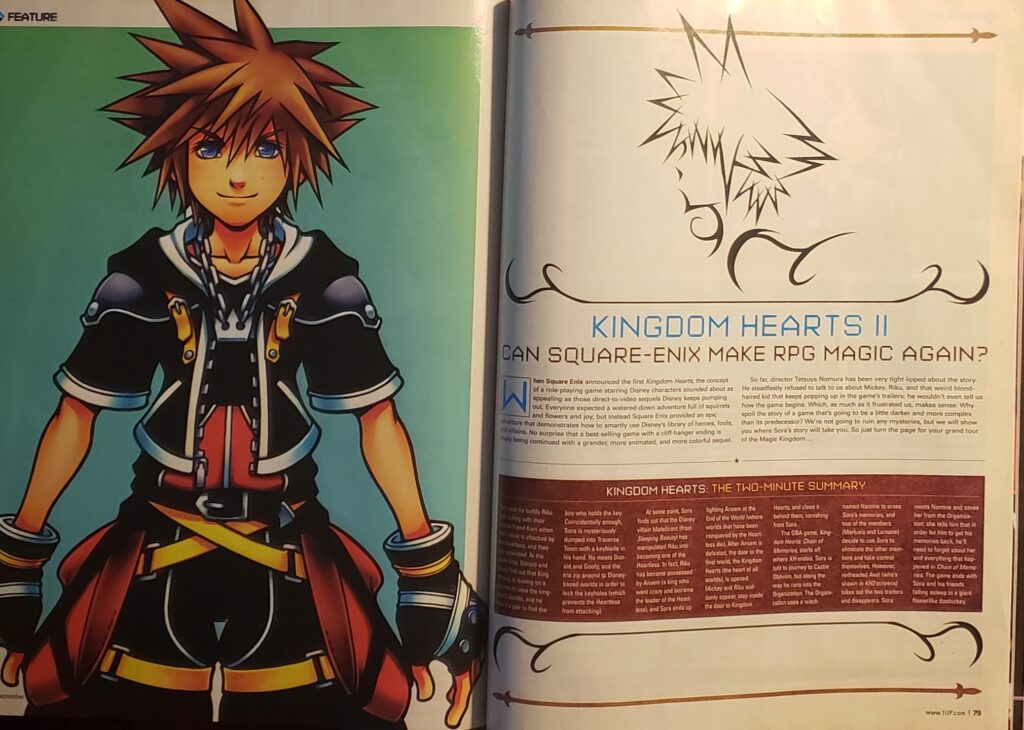
One of those video games would be this issue of OPM’s featured title: Kingdom Hearts 2. September 2005 was some number (don’t have my calculator, sorry) of months away from KH2’s official North American release date of December 22, 2005.
The NA release of Kingdom Hearts 1 on March 28, 2002 had been a rollicking success, having shipped 2 million copies (4 million worldwide) as of March 2004, and it is safe to say that the hype surrounding the imminent release of KH2 was real (pre-internet hype in 2005 looked very different from the jaw-slavering hype of 2022, however). I played it soon after it came out, yet the mental and hormonal changes I endured between the ages of 13 and 16 rendered me nearly incapable of enjoying the experience to the extent that I had enjoyed KH1. I don’t know, man; I guess I just wasn’t into the Disney shit anymore, although I did (and still do) dig the overall “vibe” of the game, meaning the art and sound direction.
Although I had no idea who either of these people were back in 2005, we can credit the exceptional quality of the art and music of the Kingdom Hearts franchise to Tetsuya Nomura and Yoko Shimomura, respectively. The title screen alone–Sora with his back turned, looking wistfully into the distance as the track, “Dearly Beloved”, with its softly staggering piano melody and gentle wave sounds–covers me in that warm nostalgia blanket and carries me away to a lonely island in a land both strange and familiar. I meet my friend Kairi on the beach, and we talk about the world beyond the sea. I feel as close to home as I have ever been.
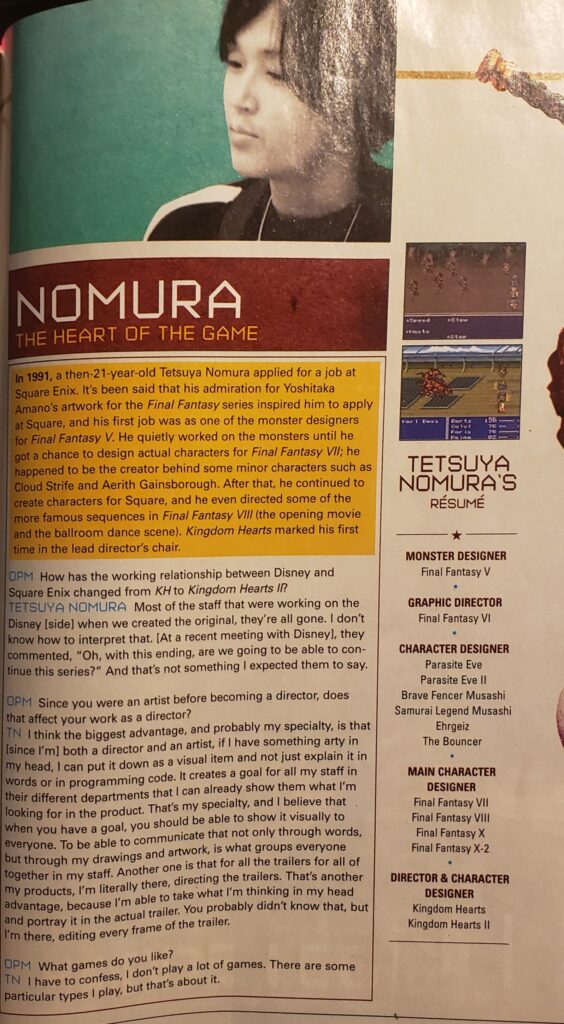
I guess I should tell you who Tetsuya Nomura is (you probably already know): the director and original concept designer behind the Kingdom Hearts franchise. Nomura had been a character designer at Square-Enix since the early 1990s, and KH1 marked his first plop into the director’s chair. He’s well known for his distinct character designs, often taking heavy cues from the Japanese street fashion world of Tokyo’s Harajuku district and its terrifyingly crowded city streets. Nomura even shows up here in this OPM issue, although his three-question interview is more than a little disappointing. The only worthwhile query of the three asked if his previous work as an artist dictated how he works as a director, and his answer is kind of interesting. He states that, due to his artistic background, he is able to visually portray the ideas in his head and convey them to his staff without having to explain his vision through words. This ability to directly communicate his vision through his artistic abilities coupled with Nomura’s distinct design style explains why the Kingdom Hearts games appear to have such a cohesive feel despite the many disparate elements of its presentation (Final Fantasy + Disney + street fashion = profit?). He goes on to state that this form of communication,
“…is what groups everyone together in my staff.”
This makes me wonder about the artistic abilities and professional backgrounds of the typical game director. What I would really like to know is what a games director does in his or her free time. The answer may surprise you, as Nomura goes on to state,
“I have to confess, I don’t play a lot of games. There are some particular types I play, but that’s about it.”
What “types” do you play, Nomura? Huh, Nomura? What “types” of games do you play that would make you this evasive, Nomura?…But hey, man, no judgements here.
Although she didn’t show up in this KH2 feature, I’d also like to talk a bit about the KH franchise’s soundtrack composer, Yoko Shimomura. I’m disappointed that we don’t hear from her (maybe not? They probably would have just asked her about the music she listens to, and she’d say she doesn’t listen to a lot of music) because the music in this game is absolutely the toad’s trousers and the aspect of the game that I remember most fondly.
The aforementioned track, “Dearly Beloved,” –which I’m listening to on repeat while writing this thing–is such a perfectly bittersweet piece of music. I feel warm and weightless, and the child within me, who never died and only sleeps, awakens somewhere. He’s drowsy in there, and he’s alone and scared, yet here he is: cognizant and alive and passing a raining day with Sora and Kairi in front of a 20-inch CRT television, and we are friends in this magical place where we will stay, seemingly forever. And yet, the world calls and children become encased in the forms of adults, and that’s how they remain, hidden in that way. This melancholy melody wakes the sleeping child who knows that soon enough he must return to his slumber. That’s how this song makes me feel–that’s how Kingdom Hearts makes me feel.
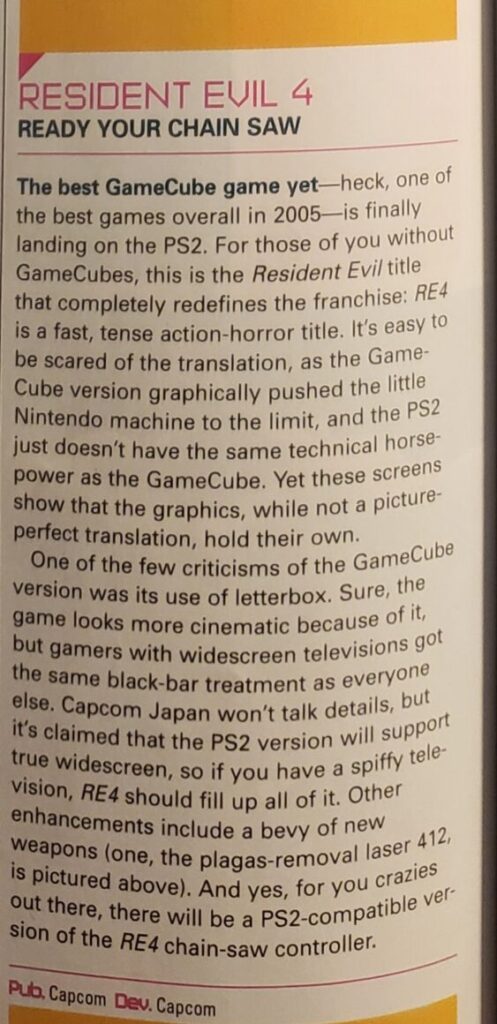
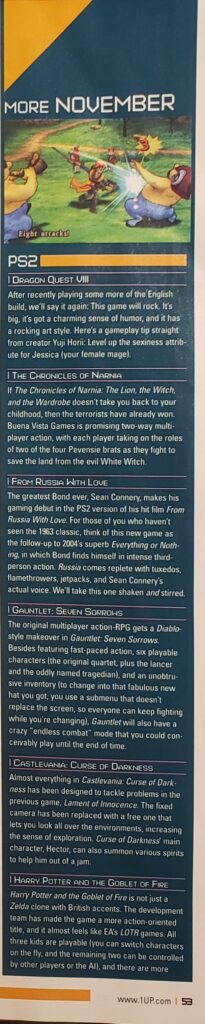
I feel like I’ve written a lot while saying very little, so maybe we should get on with whatever else is in this issue. First, we have the games that I cared about back then and still care about today: Dragon Quest VIII and Resident Evil 4. DQVIII was a couple months shy of its November 15, 2005 NA release date, and Resident Evil 4’s port from GameCube to PS2 was hitting on October 25.
I don’t think I have to tell any of you how good these games are, because they’re arguably a couple of the best games ever made, at least within their respective franchises. Resident Evil 4 is actually one of the few games that I have played all the way through more than once (I particularly enjoyed the Wii version), and DQVIII is high on my list of games to replay. There isn’t anything particularly interesting in the previews of these two games, although RE4 mentions that,
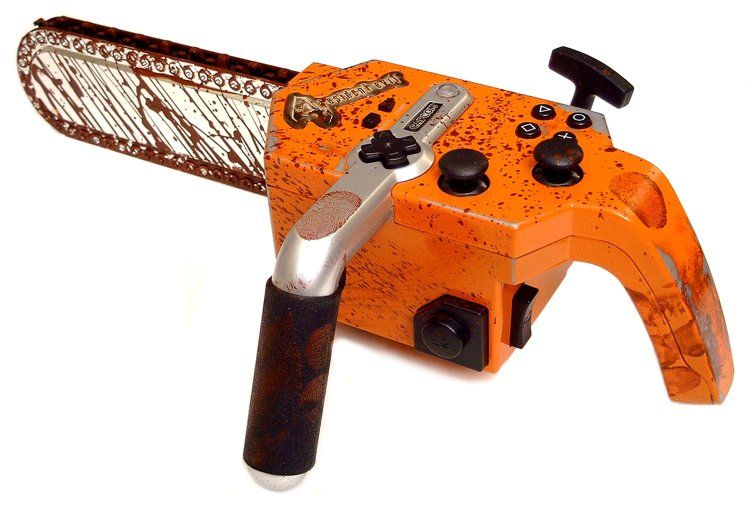
“…there will be a PS2-compatible version of the RE4 chain-saw controller.”
WTF is that? I’ve never heard of an RE4 chainsaw controller (okay, I just looked it up, and holy hell does it look like a nightmare to try and play with).
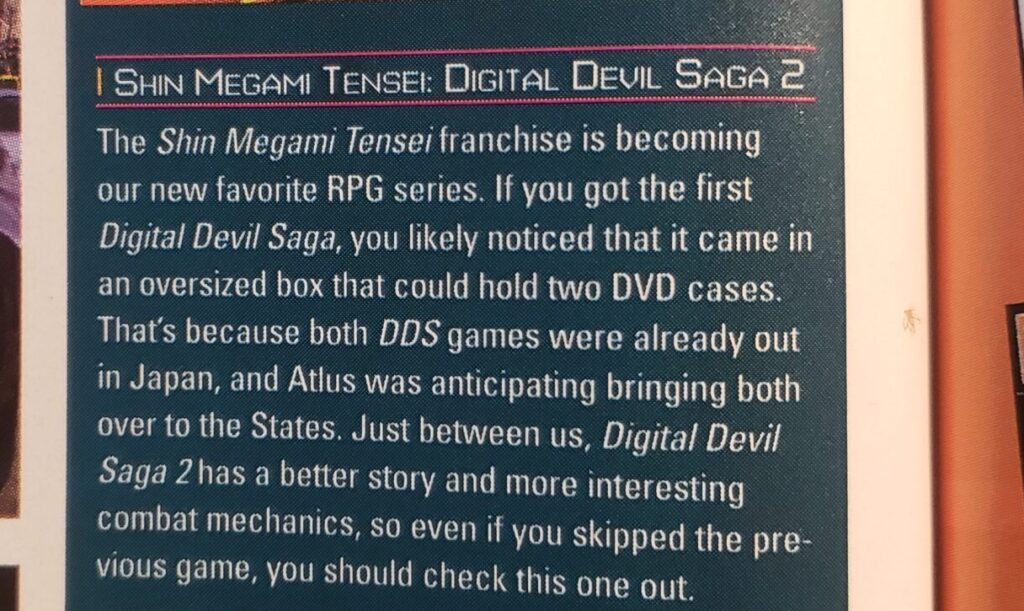
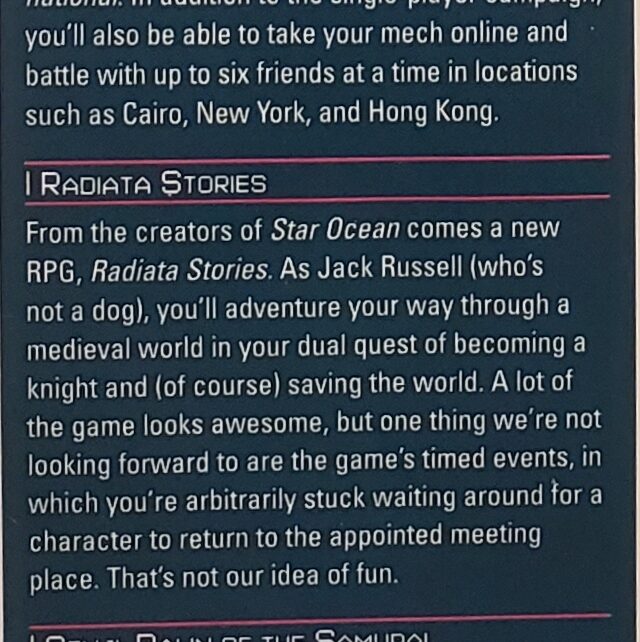
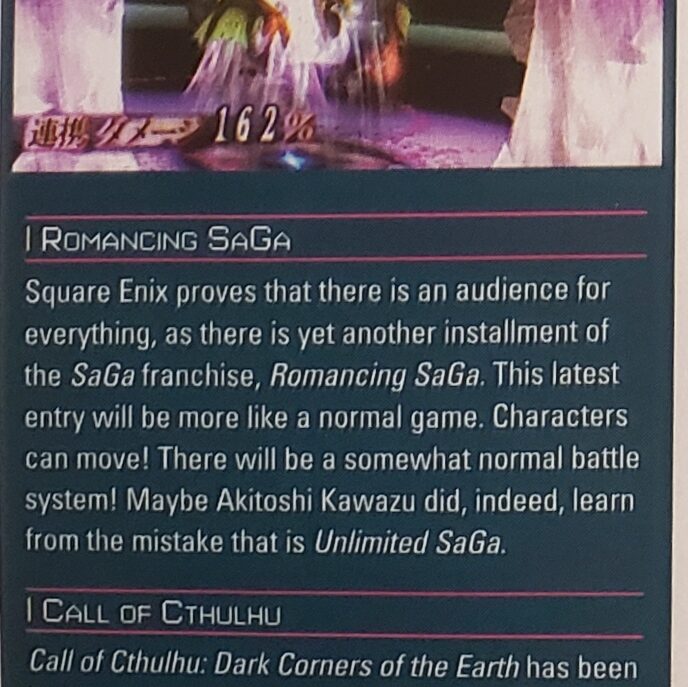
Next, we have a few games that I wasn’t aware of at the time but have, in the intervening years, decided I would like to play. Radiata Stories jumped out at me first, as I own a copy that I’ve never played; in fact, it is probably the longest-owned game in my current backlog, with… a lot of notable exceptions (which we’ll get to in subsequent posts). The details of my misdeed are murky, but I borrowed the game from an old acquaintance many years ago and never returned it (sorry, J.R.). Perhaps I will make it up to him by finally playing it (it’s on the list). We’ve also got Romancing SaGa and Shin Megami Tensei: Digital Devil Saga 2. I plan to play Romancing SaGa at some point, but I’ll probably skip the DDS games, at least for the foreseeable future.
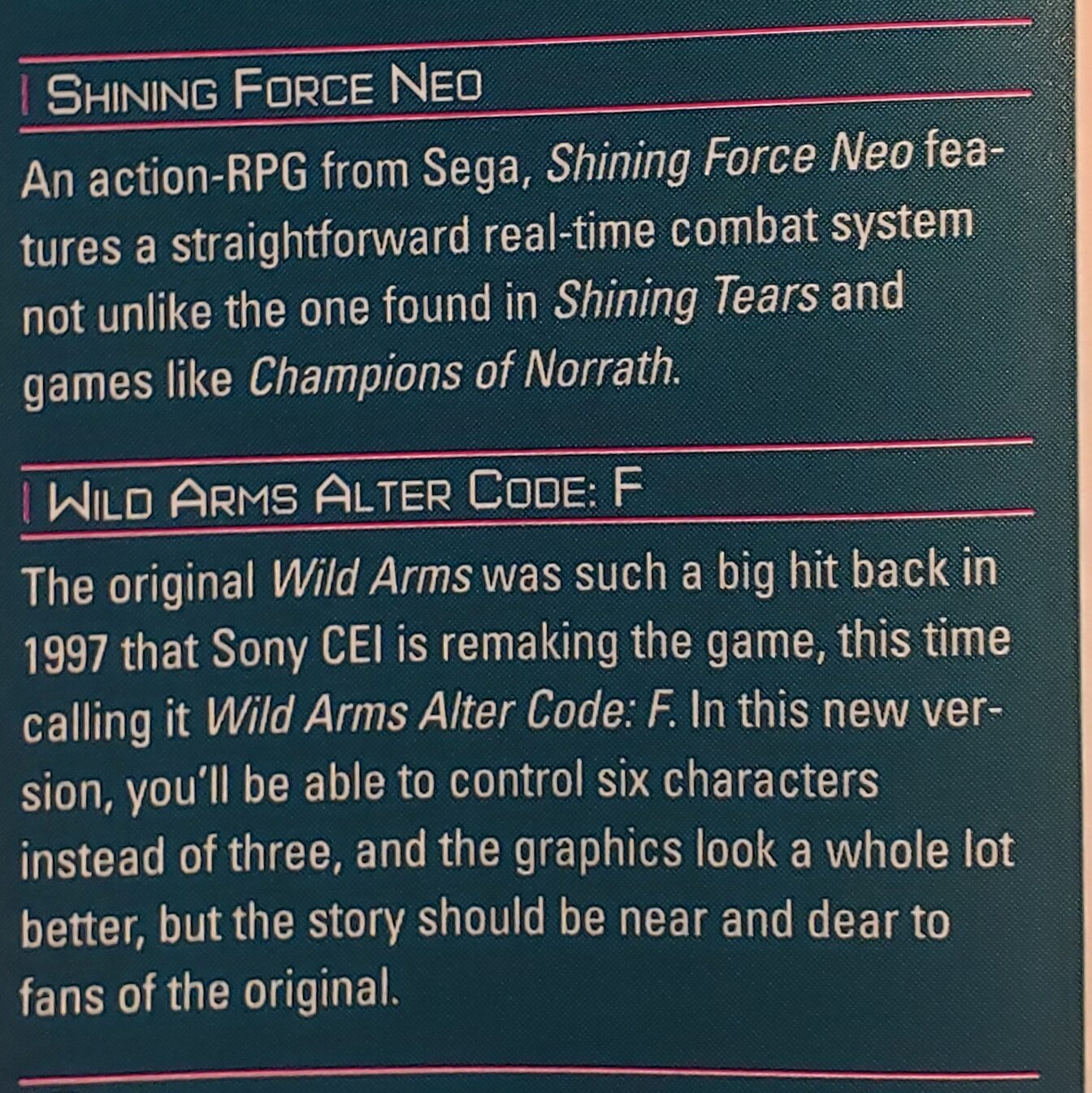
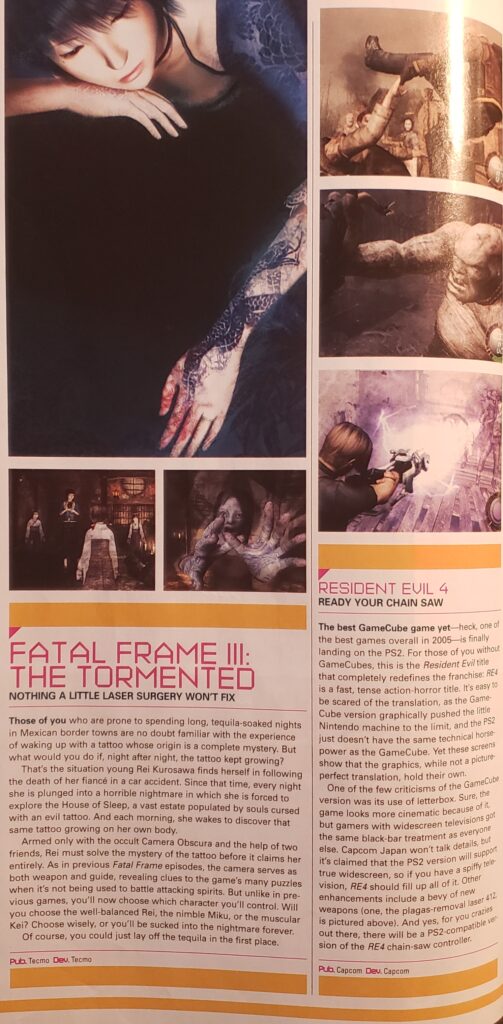
Finally, we have three games that I haven’t even heard of, though I’m aware of the existence of their franchises: Shining Force Neo, Wild Arms Alter Code: F, and Fatal Frame 3. I’m aware of each of these franchises yet haven’t played a single game from any (besides Wild Arms 1). I’m just noting them, as I plan to dig into each franchise in time, and if you’re reading this thing sometime far in the future, just know that I tried.
And that’s it; that’s the end. There are a few other articles in here that I wanted to talk about, but this thing is already way too long as it is. If you made it this far, then I thank you. I plan to check out some other old gaming magazines, so stay tuned for the next self-indulgent episode of Magazine Memories.
Leave a Reply